

– Oluwaseun Adedayo Omotoso*
Introduction
On July 15, 2025, gunmen attacked Jebu village in Plateau State, killing 27 people, including children, and burning homes, despite residents’ early warnings to security forces. In March 2024, bandits abducted 287 schoolchildren in Kaduna’s Chikun area, part of over 700 abductions across Nigeria’s North West and North East. In 2024, state agents suppressed the #EndBadGovernance protests, arresting over 1,000 people, including minors charged with treason, a tactic that continued into 2025 to silence citizens demanding better security and improved living conditions. These incidents highlight Nigeria’s escalating insecurity crisis—driven by banditry, kidnappings, and herder-farmer conflicts—and the state’s often heavy-handed legal responses.
Insecurity threatens lives and democracy, with laws like the Terrorism (Prevention and Prohibition) Act 2022 being misused to suppress dissent. This article examines Nigeria’s legal framework for addressing banditry and kidnappings, focusing on contemporary developments, state suppression, and human rights implications. Drawing on recent incidents, it proposes reforms to balance security with fundamental rights, urging lawyers, policymakers, and advocates to foster a legal system that restores trust and ensures sustainable peace.
Overview of Insecurity in Nigeria
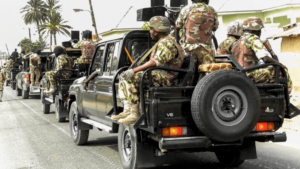
Nigeria’s security crisis intensified in 2025, with the North West and North East of Nigeria worst hit. In the first half of 2025, bandits and insurgents killed about 2,266 people, surpassing the total of 2,194 for all of 2024, according to the National Human Rights Commission (NHRC). Notable incidents include the March 2024 abduction of 287 pupils in Kaduna’s Chikun area, 15 children from a Sokoto Islamic school, and 61 people in Kaduna’s Kajuru area. In July 2025, about 40 people were killed in Plateau State, and nine farmers were murdered in Zamfara, with over a dozen kidnapped. These attacks, often targeting vulnerable groups like schoolchildren, have displaced thousands and crippled agriculture, exacerbating food inflation above 40% in 2024.
The #EndBadGovernance protests of August 2024 saw over 1,000 arrests, with dozens, including minors, charged with treason, sparking public outrage. Farmer-herder clashes, particularly in the Middle Belt, continue to fuel violence, with a July 2025 attack in Plateau killing 27. These incidents reflect a broader crisis: banditry and kidnappings generate vast ransoms, approximately ₦2.2 trillion between May 2023 and April 2024, a figure which surpassed Nigeria’s 2024 defense budget.
Legally, insecurity impacts constitutional rights to life (Section 33), liberty (Section 35), and movement (Section 41), alongside state powers under Section 305 for emergencies. However, responses often prioritize punitive measures over addressing root causes like poverty and governance failures, necessitating a deeper look at the legal framework.
Legal Framework Governing Insecurity in Nigeria
Nigeria’s legal response to insecurity relies on several statutes, though the application of these statutes reveals critical flaws:
- Terrorism (Prevention and Prohibition) Act 2022: This law’s broad definition of terrorism, covering acts that “seriously destabilize” the state, gives room for misuse. The treason charges against #EndBadGovernance protesters, including minors, for peaceful dissent exemplify this overreach. In Dokubo-Asari v. Federal Republic of Nigeria (2007), the Supreme Court limited prolonged detentions under anti-terrorism laws, yet similar violations persist in 2025.
- Criminal Code and Penal Code: These provide penalties for kidnapping (up to seven years) and banditry-related offenses. However, enforcement of the provisions in this regard is rather weak and ineffective due to underfunded police, corruption, and delayed prosecutions. In 2025, only 31,912 suspects were arrested nationwide for crimes including kidnapping, a fraction of reported cases.
- Constitutional Provisions: The 1999 Constitution safeguards rights to life, liberty, and movement, but security operations often violate these through arbitrary arrests and excessive force. Section 305 allows emergency declarations, but their use, as in past Boko Haram responses, rarely addresses systemic issues.
- Judicial Oversight: Courts are critical in checking state power. In Lakanmi v. Attorney General (West) (1971), the Supreme Court emphasized the supremacy of the constitution during emergencies. However, 2025 saw judicial delays in reviewing security-related detentions, thereby prolonging violation of the constitutional rights of persons involved.
- Other Challenges: Vague legal definitions, corruption, and over-reliance on military solutions hinder progress. The use of the Terrorism Act’s against protesters undermines Section 39 of the Nigerian Constitution which guarantees freedom of expression. Further, corruption within government and security agencies, including allegations of collusion with bandits, as seen in the arrest of a former Zamfara Local Government Chairman, further erodes confidence in the existing state security framework while weak intelligence and poor inter-agency collaboration exacerbate enforcement failures.
Human Rights Implications
While the general state of insecurity affects the quality of life of citizens, inconsiderate security measures and state suppression infringe on fundamental rights, deepening public distrust of agents of the state:
- Arbitrary Arrests and Detentions: The #EndBadGovernance arrests saw over 1,000 detentions, many exceeding the 24-hour limit under Section 35. Charging minors with treason violates the Child Rights Act 2003 and the UN Convention on the Rights of the Child. In 2025, the NHRC condemned these detentions, noting prolonged screenings of suspected Boko Haram associates, including women and children.
- Extrajudicial Killings and Excessive Force: Human Rights Watch and Amnesty International reported security forces’ excessive force in 2024–2025, particularly in the North West, with minimal investigations. The July 2025 Plateau attack highlighted the lapses in response to security issues, as forces failed to respond despite early warnings.
- Impact on Vulnerable Groups: Schoolchildren and rural communities are prime targets and victims of the security challenges. The March 2024 Kaduna abduction of 287 pupils increased out-of-school children in the North West to 3.49 million, risking recruitment into criminal groups. Girls face sexual violence, with reports of rape during abductions.
The NHRC’s 2025 reports criticized protest detentions and poor conditions for North East detainees, including children, but its lack of enforcement powers limits its impact. Incidents of extrajudicial and arbitrary detentions breach the African Charter and the ICCPR.
Case Study: the Kaduna and Plateau Incidents
The March 2024 Kaduna abductions and July 2025 Plateau killings underscore legal and operational failures. Bandits exploited weak school security, using informants and brute force to abduct 287 pupils in Kaduna. In Plateau, the lack of security response despite warnings highlights intelligence and coordination gaps. These cases underscore the need for more effective oversight and implementation of better preventive measures.
Proposed Legal Reforms
Considering the prevalent security situation and the need for the nation to reform its legal and institutional frameworks, the following are suggested interventions which may be considered in addressing insecurity while protecting human rights:
-
Clear Legal Definitions
There is the need to amend the Terrorism Act 2022 to exclude peaceful protests from terrorism charges and ensure proportionality. There is a further need to define banditry clearly to focus on criminal acts like kidnapping, thereby preventing misuse of the Act to silence peaceful protesters.
-
Strengthened Enforcement Protocols
There is the need to increase funding for the police and judicial systems to expedite investigations and trials. The 2025 arrest of 31,912 suspects underscored the capacity of existing security apparatus. However, these structures require better resources. Anti-corruption measures, like independent oversight, could help address issues collusion personnel with bandits, as seen in Zamfara.
- Enhanced Judicial Oversight: It is important, in light of the contemporary challenges and the need for swift responses, to consider establishing specialized courts, patterned after election tribunals, for banditry and kidnapping cases to reduce delays. It is equally crucial to prioritize habeas corpus reviews and enforce detention limits under Section 35 of the Constitution, especially for minors.
- Adoption of Non-Military Solutions: Community policing, as piloted in some states, could address local grievances and enhance intelligence gathering. Addressing poverty through legal frameworks for job creation would reduce banditry’s appeal, as rightly acknowledged by President Tinubu recently.
- Empowering the NHRC: The Government of Nigeria should consider granting enforcement powers to the National Human Rights Commission to sanction violators. This will ensure accountability for human rights abuses during security operations.
- Leveraging Technology and Collaboration: There is the need to improve surveillance, analysis and intelligence disemmination through technology. There is a further need to strenghten inter-agency data sharing to preempt attacks.
- Public Legal Education: Lawyers and policy makers should lead campaigns to inform citizens of their rights during security operations, reducing fear and empowering redress through pro bono clinics.
Conclusion
Nigeria’s 2025 security crisis marked by mass abductions, killings, and protest clampdowns demands a legal response that balances state authority with human rights. The Kaduna abductions, Plateau killings, and #EndBadGovernance prosecutions reveal flaws in the Terrorism Act, weak enforcement, and constitutional violations. By clarifying laws, strengthening institutions, and prioritizing preventive measures, Nigeria can address banditry and kidnappings while maintaining respect for civil liberties and fundamental rights. Lawyers, policymakers, and advocates must advocate for these reforms, leveraging platforms like the NHRC to shape policies, going forward. There is the need to see incidents of insecurity not just as tragedies but opportunities to rebuild a legal system that upholds justice and accountability, ensuring security measures protect rather than oppress Nigerians.
- Oluwaseun Adedayo Omotoso is a Legal Practitioner, scholar and social commentator based in Lagos Nigeria.
Subscribe, follow, share!
Has this article been of help? Why not consider subscribing to our mailing list us for more.
Do not forget to share, Follow our pages on Facebook and Instagram and also subscribe to our WhatsApp Channel